
Executive Summary
- The Core Challenge: People with Disabilities (PwD) in Saudi Arabia face a severe gap in access to reliable transportation. Standard ride-hailing apps lack specialized vehicles, trained companions, and the rigorous safety tracking that families and caregivers require.
- The Social & Market Impact: Lack of accessible transport isolates individuals from daily routines, medical appointments, and education. The market required a secure digital infrastructure that transforms logistical friction into safe, independent mobility.
- The Swira Solution: Swira Design engineered a comprehensive digital mobility ecosystem for Aid-ME. We built a scalable platform featuring dynamic vehicle matchmaking based on disability type, real-time GPS tracking architectures, and automated routine scheduling, providing complete peace of mind for families across the Kingdom.
Introduction: The Hidden Mobility Gap in the Kingdom
As the digital transportation sector in Saudi Arabia rapidly advances, standard ride-hailing applications dominate the market. However, these platforms completely fail a critical demographic: People with Disabilities.
For a person requiring a wheelchair-accessible vehicle, or a family needing a trained companion for a vulnerable relative, a standard app is practically useless. Aid-ME realized that the Saudi market didn’t just need another taxi app; it needed a highly specialized, secure digital mobility solution. They partnered with Swira Design to architect a platform that prioritizes safety, strict accessibility, and family peace of mind.
1. The Infrastructure Gap (Dynamic Fleet Allocation)
Standard transportation algorithms match users based solely on geographic proximity. For Aid-ME’s user base, this approach was fundamentally flawed.
- The Problem: A user with a motorized wheelchair cannot use a standard sedan. Users need vehicles specifically equipped for their exact physical or medical requirements.
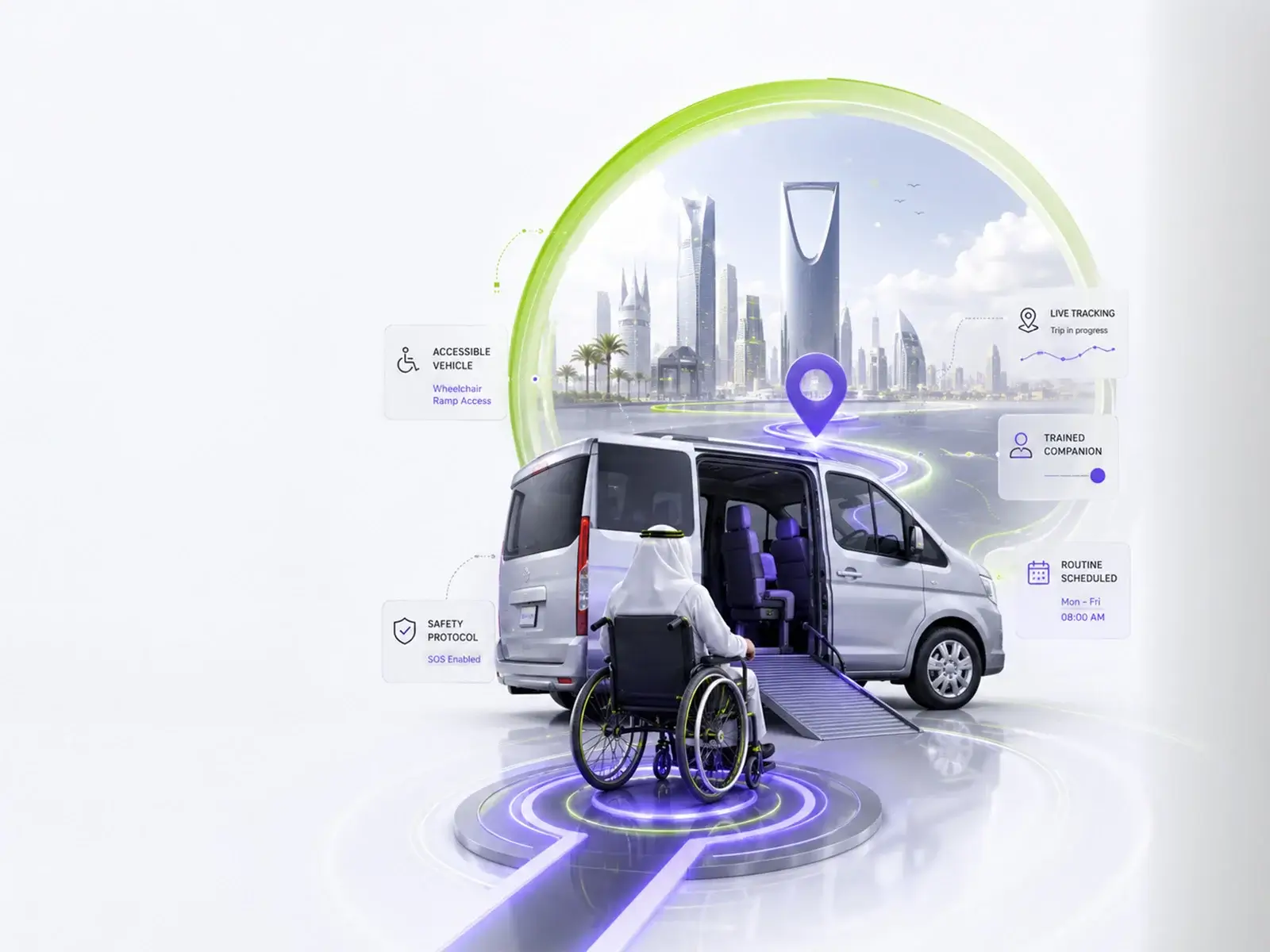
- The Swira Approach: We engineered a Dynamic Matchmaking Algorithm. During onboarding, users specify their exact mobility requirements. When a ride is requested, the system automatically filters the fleet database and dispatches only the specific vehicle type required (e.g., vehicles with hydraulic ramps), eliminating the frustration of canceled rides.
2. The Trust & Safety Barrier (Companion & Live Tracking)
When transporting vulnerable individuals to schools or medical appointments, family members experience extreme anxiety if they cannot visually verify safety.
- The Problem: Traditional transport offers zero visibility once the car door closes. Families needed a way to monitor the journey and ensure physical support was available during transit.
- The Swira Approach: We integrated a dual-layer safety architecture. First, we built a feature allowing users to request a certified companion for the trip. Second, we integrated high-precision Real-Time GPS Tracking APIs, giving parents and caregivers a live dashboard to monitor the vehicle’s exact location from start to finish, complete with a built-in Emergency SOS protocol.
3. The Routine Bottleneck (Smart Scheduling Systems)
Medical treatments, therapy sessions, and educational classes are not random; they are recurring routines.
- The Problem: Forcing families to manually book specialized transport every single morning creates massive logistical friction and stress.
- The Swira Approach: We developed a built-in Smart Scheduling Architecture. Users can pre-program their daily or weekly routines. The system automates the booking process, ensuring that the right specialized vehicle and companion are secured weeks in advance, transforming chaotic mornings into smooth, predictable routines.
4. Designing for True Accessibility (UI/UX)
A platform built for People with Disabilities cannot have a complex, visually overwhelming interface.
- The Swira Approach (Design-Driven Engineering): We applied strict accessibility standards to the app’s User Interface (UI). We utilized high-contrast color palettes, large touch targets, screen-reader compatibility, and a simplified user journey to ensure the app is usable by individuals with varying degrees of visual or motor impairments.
Ready to Architect a High-Impact Digital Solution?
If your business is trying to solve a complex logistical or social challenge in the MENA region, you need more than basic code; you need a scalable system architecture. 👉 Contact the software engineering team at Swira Design today to build digital platforms that create meaningful market impact and drive real revenue.
FAQ: Developing Accessible Mobility Solutions
How does Aid-ME differ from standard ride-hailing apps in Saudi Arabia? Unlike standard ride-hailing apps that dispatch random vehicles based on location, Aid-ME operates on a specialized digital ecosystem. It dynamically matches users with customized vehicles based on their specific disability, provides optional trained companions, and offers real-time GPS tracking for caregiver peace of mind.
Why is digital accessibility crucial for social impact apps? An app designed to help vulnerable demographics must reflect that mission in its code. Digital accessibility ensures that the User Interface (UI) accommodates visual, cognitive, and motor impairments through features like screen-reader support, simplified navigation, and high-contrast design, allowing users true independence.
What features are critical when building a mobility app for People with Disabilities? When building a mobility app for People with Disabilities, the software architecture must include specific algorithmic filtering (to match vehicle types to medical needs), real-time caregiver tracking APIs, automated routine scheduling to reduce daily friction, and emergency protocols integrated directly into the dashboard.