
Many businesses today rely heavily on social media platforms to promote their services, showcase their products, and reach new audiences. With platforms like Instagram, Facebook, TikTok, and LinkedIn dominating screen time, it has become easier and more affordable than ever to connect directly with potential customers.
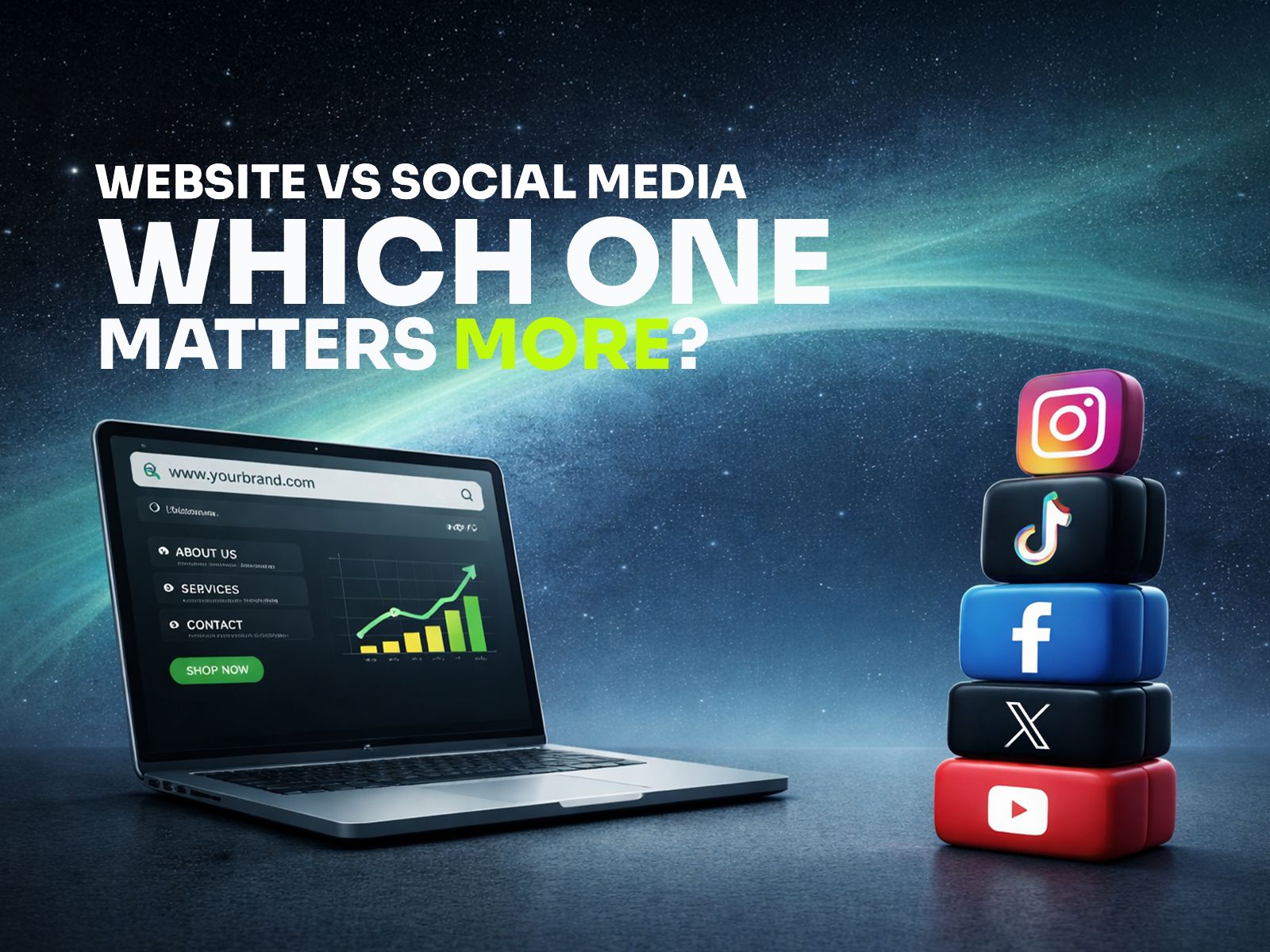
Because setting up a social media profile is free and fast, an important question frequently arises for many business owners and startup founders: Is social media enough, or does a business truly still need a dedicated website?
While it might be tempting to run a business entirely from an Instagram page or a Facebook storefront, the answer becomes much clearer when we understand the distinct, yet complementary, roles each platform plays in a successful digital strategy.
The Megaphone Role of Social Media
Social media platforms are designed primarily for visibility, community building, and real-time interaction. They are the digital equivalent of a busy public square, a place to grab attention and start conversations.
The Strengths of Social Media
- Rapid Audience Reach
Social algorithms can help your content go viral, putting your brand in front of thousands of non-followers almost instantly. - Direct Customer Interaction
It allows for two-way communication. You can answer questions, reply to comments, and run polls in real-time. - Brand Humanization
Behind-the-scenes content, employee highlights, and casual updates help build an emotional connection with your audience. - Targeted Advertising
Social platforms offer highly targeted ad targeting based on user interests, behaviors, and demographics.
Building on “Rented Land” Risk
The biggest drawback of social media is a lack of control. When you build your business exclusively on a social platform, you are building on “rented land.”
- Algorithm Changes
An update to a platform’s algorithm can slash your organic visibility overnight, meaning your followers might never even see your posts. - Account Suspensions
Platforms can block, suspend, or delete accounts without warning due to policy changes or automated errors. - Content Lifespan
A tweet or an Instagram post has a very short lifespan. Within 24 to 48 hours, your content is pushed down the feed and practically disappears.
The foundation is the website role.
If social media is the megaphone, a website is your digital storefront and central hub. Unlike social media platforms, a website is a digital asset that is 100% owned and controlled by the business itself.
The Strengths of a Website
- Complete Creative Control
You dictate the layout, branding, customer journey, and user experience without being restricted by a platform’s template. - Search Engine Discoverability (SEO)
When people need a solution, they “Google” it. A well-optimized website ensures your business appears in search engine results exactly when customers have a high intent to buy. - Data Ownership
With a website, you own your customer data. You can track visitor behavior, collect email addresses, and build a subscriber list that no algorithm can take away from you. - 24/7 Sales and Customer Service
A website acts as an always-on sales representative. It can answer FAQs, process payments, and schedule appointments even while you sleep. - Ultimate Credibility
In today’s market, a social media page is expected, but a website proves legitimacy. For many potential customers, visiting a website is the final verification step that confirms a business is professional, established, and trustworthy.
Website vs. Social Media Comparison
| Feature | Website (Your Digital Home) | Social Media (The Public Square) |
| Control & Ownership | Full. You own the domain, the data, and the content. | None. The platform dictates the rules and owns the audience. |
| Primary Purpose | Conversion, deep information, sales, and credibility. | Engagement, brand awareness, discovery, and networking. |
| Content Lifespan | Evergreen. A well-written blog or product page can generate traffic for years. | Short. Posts lose visibility within hours or days. |
| Discoverability | High intent (Search Engines / SEO). Users are actively looking for solutions. | Low to Medium intent (Algorithms). Users stumble upon your content while scrolling. |
| Analytics & Data | Deep insights (bounce rate, time on page, exact conversion paths). | Surface-level metrics (likes, shares, comments, basic reach). |
The Power of Synergy Strategy
The most effective digital strategy does not force a business to choose one over the other. Instead, it leverages the strengths of both to create a marketing funnel.
Think of social media as your discovery channel. You use entertaining, educational, and engaging content on platforms like Instagram or LinkedIn to grab attention and build relationships.
Then you use clear calls to action (CTAs) to drive that audience to your website (the foundation). Once they land on your website, the environment is free from competitor ads and scrolling distractions. Here, they can read detailed case studies, browse your full catalog, sign up for your newsletter, and ultimately make a purchase or book a service.
When both work together seamlessly, businesses create a robust, reliable, and highly profitable digital presence.
Summery
Social media is a powerful, undeniable force for visibility and daily engagement. However, relying on it entirely leaves your business vulnerable to unpredictable algorithm shifts. A website provides the stability, ownership, and credibility that every serious business needs to survive in the long run.
Companies that combine the expansive reach of social media with the solid foundation of a professional website build stronger brands, capture more leads, and create better long-term growth opportunities.