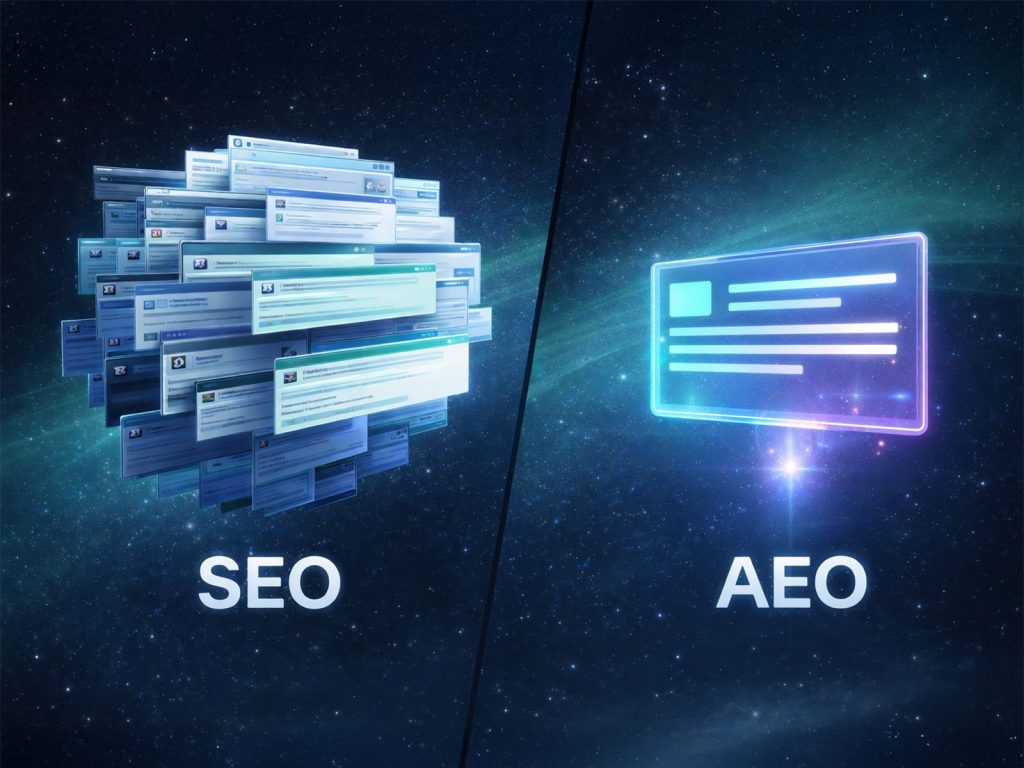


Many businesses are noticing a frustrating new trend. Even after asking AI tools (like ChatGPT, Perplexity, Claude, or Google’s AI Overviews) multiple questions about their specific industry, their website never appears in the answers or citations.
This happens more often than people expect, and it stems from a fundamental shift in how information is retrieved. AI systems do not process information the same way traditional search engines do. Instead of just matching keywords, they synthesize context, entities, and relationships.
If your website is invisible to AI, there are several key reasons behind it and specific steps you can take to fix it.
1. Your Website Lacks Recognized Authority
AI systems are heavily programmed to avoid “hallucinations” (making things up) by relying on information from sources that appear highly trustworthy and well-established. If a website does not demonstrate clear expertise or trustworthiness, an AI model will pass over it in favor of a more reputable source.
AI models are trained to identify signals that align with Google’s E-E-A-T (Experience, Expertise, Authoritativeness, and Trustworthiness) guidelines.
Solution
- Publish original research
AI loves to cite unique data, statistics, and original case studies that cannot be found elsewhere. - Showcase author credentials
Ensure your articles have author bios that highlight the writer’s real-world expertise and credentials in the subject matter. - Earn quality backlinks
Mentions from high-authority websites (like news outlets or industry associations) signal to AI that you are a trusted player in your space.
2. Your Content Is Not Structured for AI Parsing
AI systems analyze content differently from traditional search engine crawlers. Large Language Models (LLMs) break text down into “tokens” and look for logical relationships. Content that is giant walls of text, difficult to understand, or poorly formatted is much harder for an AI to interpret and summarize.
AI models prefer clean, predictable structures that enable them to extract direct answers quickly.
Solution
- Use clear, hierarchical headings
Organize your content logically using H1, H2, and H3 tags. - Provide direct answers
Answer the core question of the article within the first few paragraphs using clear, concise language. - Utilize lists and tables.
AI models are excellent at reading and reproducing data from bulleted lists, numbered steps, and HTML tables. - Implement Schema Markup
Use structured data (such as the FAQ schema or Article schema) in your website’s code to explicitly tell machines what your content is about.
3. Your Website Has No Clear Topical Focus
AI platforms often cite websites that demonstrate deep, comprehensive expertise in a specific topic. Websites that publish random, generalized, or unrelated content often struggle to be recognized as reliable authorities on any single subject.
AI models group concepts together semantically. If your site covers a little bit of everything, it won’t be seen as a definitive source for anything.
Solution
- Build Topic Clusters
Instead of writing one isolated blog post, create a “pillar page” covering a broad topic, and link it to several smaller, detailed articles covering sub-topics. - Stay in your lane
Focus your content strategy strictly on topics directly related to your core business and industry expertise.
4. Your Brand Is Not Recognized as an “Entity”.
AI systems don’t just read words; they build Knowledge Graphs made up of “entities” (recognizable brands, people, places, and concepts). If your brand lacks a clear digital footprint across the web, it becomes harder for AI systems to understand who you are, what you do, and why you matter.
When a user asks an AI about the “best software for X” or “top plumbers in Y,” the AI pulls from its database of recognized entities. If you aren’t an entity, you won’t be recommended.
Solution
- Build a robust “About Us” page that clearly states who you are, what your company does, your history, and your location.
- Maintain consistent NAPs
Ensure your Name, Address, and Phone number are consistent across all directories, social media, and your website. - Claim your profiles
Keep your Google Business Profile, LinkedIn, Crunchbase, and relevant industry directory profiles active and up to date.
5. You Lack Conversational and Q&A Content
Traditional SEO often focused on short, robotic keywords (e.g., “plumber near me”). However, people interact with AI tools using natural, conversational language (e.g., “What should I do if my pipes freeze in the middle of the night and I live in Chicago?”).
AI tools exist to answer questions. If your website doesn’t explicitly answer the specific questions people are asking, the AI has nothing to pull from.
Solution
- Create FAQ sections
Add Frequently Asked Questions sections to your core service and product pages. - Target long-tail questions
Use tools like AnswerThePublic or the “People Also Ask” section to find out exactly what questions your customers have, and write dedicated articles that answer them thoroughly.
6. Your Content Lacks “Information Gain”.
If your website rewrites the same information that is already available on Wikipedia or the top 5 Google search results, an AI has absolutely no reason to reference you.
AI models already know the consensus. They look to the live web to find new perspectives, recent updates, or unique insights that add value (known as “Information Gain”)
Solution
- Stop writing generic fluff. Inject your unique company methodology, strong opinions, quotes from your internal experts, and proprietary data into every piece of content you publish.
7. Technical Barriers are Blocking AI Bots
Sometimes the issue isn’t your content at all, it’s your website’s code. If the web crawlers used by AI companies (such as OpenAI’s GPTBot or Google’s crawlers) cannot access your site, you will never appear in their answers.
AI systems require training data and real-time browsing capabilities to formulate up-to-date answers.
Solution
- Check your robots.txt file
Ensure you haven’t accidentally blocked AI web crawlers from scanning your public content. - Improve page speed and accessibility.
Ensure your site loads quickly and doesn’t hide core text behind complex JavaScript that bots struggle to read.
Summary
Appearing in AI-generated answers does not happen by accident; it requires a proactive shift from traditional Search Engine Optimization (SEO) to Generative Engine Optimization (GEO).
Websites that demonstrate deep expertise, provide highly structured information, establish themselves as digital entities, and offer unique value are significantly more likely to be referenced by AI systems. As conversational AI search continues to evolve and replace traditional browsing habits, businesses that adapt their content strategy today with the right expert guidance will gain a massive competitive advantage tomorrow.
SWiRA DESiGNS specializes in transforming websites into highly authoritative, AI-friendly digital entities. Navigating the shift from traditional SEO to Generative Engine Optimization (GEO) can be overwhelming, but you don’t have to do it alone.
Whether it’s restructuring your content for LLM parsing, implementing advanced schema markup, resolving technical crawler blocks, or building targeted topic clusters, our team handles the heavy lifting. We bridge the gap between human-centered design and machine-readable data, ensuring your brand isn’t just visible to traditional search engines but is correctly understood, recognized, and recommended by the latest AI platforms.